One page. Multiple problems. All surfaced at once.
A single monitoring run can reveal that the same page has several issues — weak evidence, a missing comparison angle, and an unclear CTA. Rankwize surfaces all of them: one primary recommendation (the highest-impact fix) plus up to three secondary recommendations, each with its own fix type and actions checklist. You see the full picture in one pass.
Available on Pro + Diagnose and above
Primary and secondary recommendations.
Every Diagnose run produces exactly one primary recommendation — the fix with the highest expected impact for that prompt-platform-page combination. The primary fix type is determined by the gap dimension that failed most: freshness, evidence strength, structure, audience fit, or CTA quality.
Up to three secondary recommendations are surfaced in the same pass. Each secondary recommendation has:
- Its own fix type — independent of the primary
- Its own gap dimension — a different failure signal
- Its own actions checklist — specific steps to close that gap
You don't have to run multiple diagnosis cycles to discover all the problems with a page. A single run produces the complete picture.
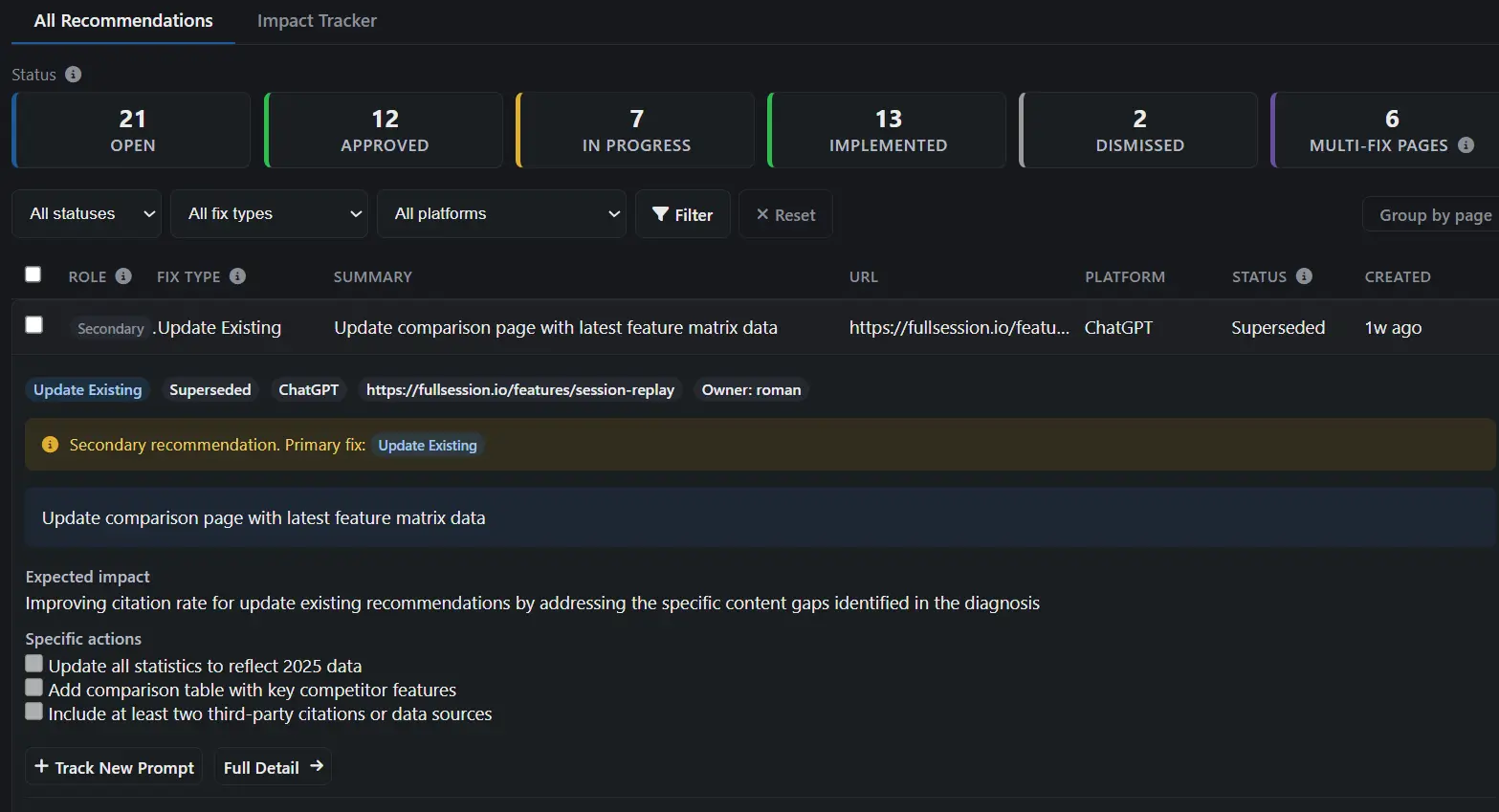
Expanded recommendation showing primary fix type, gap summary, and actions checklist.
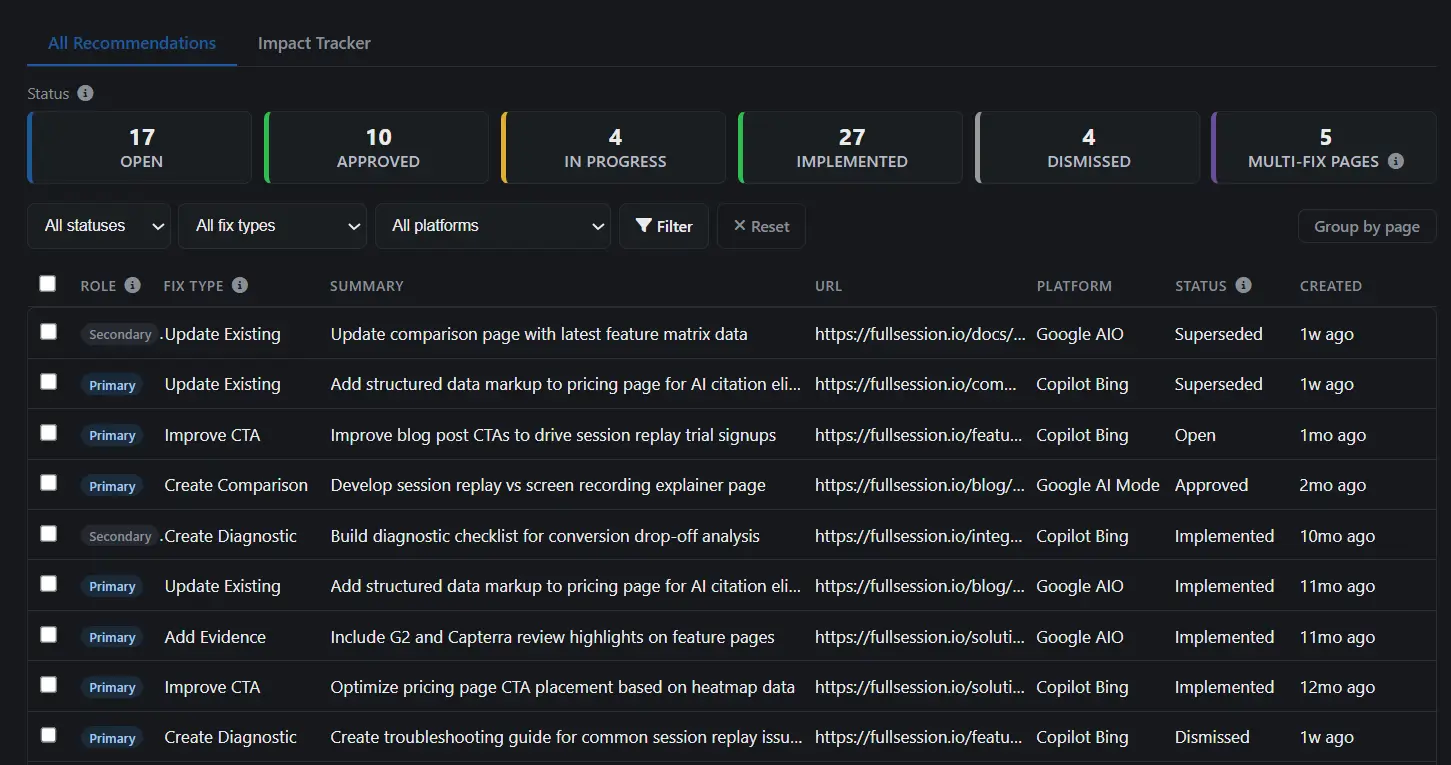
Work queue showing primary and secondary recommendations per prompt — each with its own fix type badge.
Why one recommendation isn't enough.
A page that's failing a citation audit rarely has one problem. Evidence strength might be the biggest gap — but the same page often also has a CTA mismatch, or structure that makes it hard for AI engines to extract and cite. Fixing only the most obvious issue and re-running a diagnosis cycle a week later to find the next one adds iteration time that compounds across dozens of failing prompts.
Multi-recommendation runs the full gap analysis in a single pass and surfaces everything. You can triage the secondary recommendations — defer some, address others alongside the primary — but you have the full picture from the start.
The primary recommendation is always ranked by expected impact. The secondary recommendations are ranked by the strength of the gap signal, not by the order they were found.
Working through recommendations.
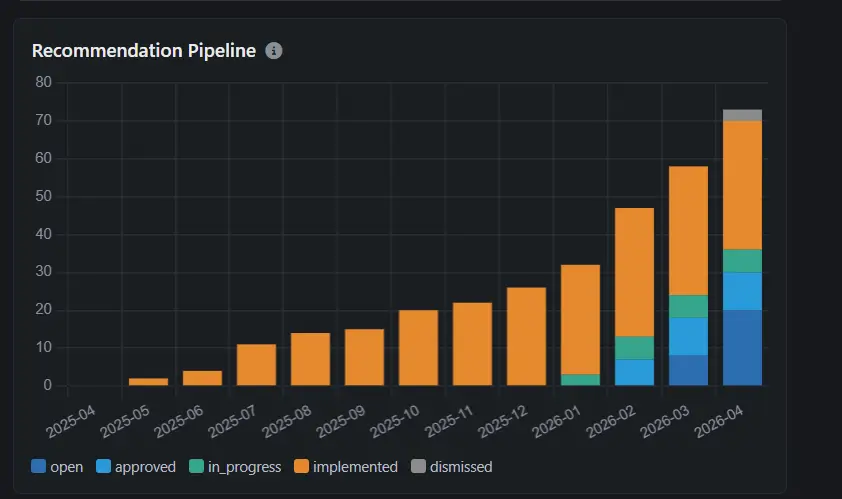
Each recommendation — primary or secondary — moves through the same status workflow: Open → Approved → In Progress → Implemented. You can assign individual recommendations to team members independently. A page with four recommendations can have four owners working in parallel.
Once a recommendation reaches Implemented status, Impact Tracker records the before-citation baseline and tracks the after result on the next monitoring cycle. Primary and secondary recommendations are tracked independently — you see which specific fix drove the citation lift.
How it works
Diagnose
The Diagnose engine runs a full five-dimension gap analysis against the competitor page currently being cited.
Surface
The primary recommendation is assigned by the highest-impact failing dimension. Up to three secondary recommendations are assigned from the remaining gap signals.
Track
Each recommendation is tracked independently through implementation. Impact Tracker attributes citation changes to the specific fix that drove them.
Multi-Recommendation is part of the Rankwize Diagnose engine — built on the same Fix Type Taxonomy and Content Library Matching that powers every gap analysis.